- posted by : JenniferV
- Family dentist
- Comments Off on Coffee, Boba & Wine—Bay Area Drinks That Stain (and How to Protect Your Smile)
Coffee, Boba & Wine—Bay Area Drinks That Stain (and How to Protect Your Smile)
From Philz cold brew to weekend boba runs and Napa reds, the Bay Area runs on flavorful drinks. The trade-off? Dark pigments and acidity can leave surface stains and, with frequent sugar exposure, raise cavity risk. You don’t have to quit your favorites—just use smarter habits. This guide is tailored for Milpitas, with care for commuters from San Jose, Fremont, Union City, Mountain View, Sunnyvale, and Alviso.
Why these drinks change tooth color
Staining happens mostly on the enamel surface. Dark beverages carry chromogens (pigments) and polyphenols like tannins that bind to the tooth’s pellicle. Research testing tannic-acid solutions at red-wine–like concentrations shows contact time increases enamel staining and surface changes—one reason tea/wine can tint teeth faster than you’d expect.
Acidity adds fuel to the fire. Low-pH drinks (many sparkling teas, sodas, wines, kombucha) can soften enamel for a short window, making pigments stick more easily and nudging surface wear over time. Recent lab work measuring enamel roughness after exposure to everyday acidic beverages confirms that repeated acid hits change the surface, which can amplify stain pickup.
Where boba fits in
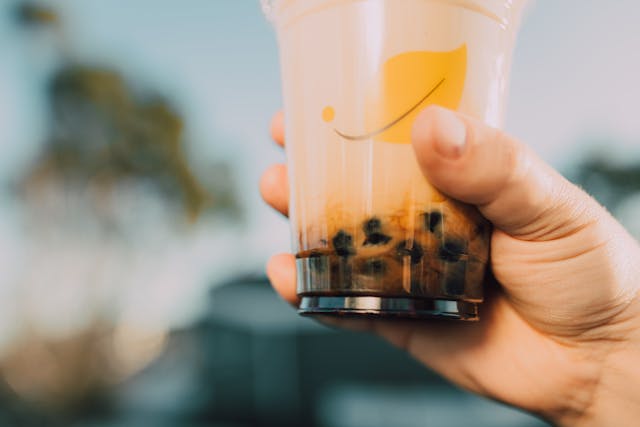
Classic milk tea with pearls often contains high added sugars. Frequent sipping keeps sugar in contact with teeth, feeding cavity-causing bacteria. A 2020 systematic review and meta-analysis found sugar-sweetened beverage intake is associated with higher risk of dental caries and erosion in both kids and adults—pattern matters as much as volume.
Everyday strategies that really work
- Rinse, then wait to brush. After a staining or acidic drink, swish with water. Brush ~30 minutes later so you’re not scrubbing temporarily softened enamel.
- Use a straw for iced drinks. Aim the stream past front teeth for iced coffee or milk tea.
- Time your sips. It’s better to finish a drink within 15–30 minutes than to nurse it for hours; less total “acid/sugar contact time” means less risk.
- Pair with enamel-friendly snacks. Nuts, cheese, and yogurt during wine tastings can help buffer acids and stimulate saliva.
- Upgrade your routine. Use fluoride toothpaste twice daily to strengthen enamel; a gentle whitening toothpaste helps lift surface stain between cleanings.
- Mind the mix-ins. Ask for “less sweet,” cut syrups, or choose unsweetened tea. Consider fewer pearls (they cling to molars) and avoid sticky add-ons like brown-sugar syrup.
Whitening options that fit Bay Area life
- Pro cleanings every 6 months clear plaque and much surface stain fast.
- Custom take-home trays let you brighten gradually around work or school.
- In-office whitening is the quickest route before events or photos.
Real talk: daily coffee/tea drinkers do best with a maintained natural shade rather than chasing an ultra-white tone once.
If you love red wine
Alternate sips with water, snack on cheese or almonds, and skip immediate brushing after tastings. At home, a whitening pen can spot-treat along the gumline before your next full touch-up.
For parents & teens
Boba can be a treat—but turn it into a mealtime drink, not an all-day sip. Keep a water bottle handy, and make post-snack xylitol gum/mints or a quick water rinse the default. If your teen is in aligners, remind them to remove/clean trays before colored drinks.
Local, practical care
At Milpitas Dental Group (1771 N Milpitas Blvd) we build stain-control plans around your actual routine—coffee at 7 a.m., boba at 3 p.m., wine on weekends. We serve Milpitas, San Jose, Fremont, Union City, Mountain View, Sunnyvale, and Alviso—minutes from Great Mall and the Milpitas Transit Center (BART) with easy 880/237 access.
Ready to refresh your shade? Book a cleaning & checkup, then ask about take-home trays vs. in-office whitening based on how often you sip. Call us: (408) 719-9340