1. Milpitas Dental Group

tooth decay

30Dec 2025

What’s the Difference Between Plaque and Tartar? (And How to Stop Both)

If you’ve ever left the dentist with that smooth, squeaky-clean feel, you’ve felt the difference between a tooth with plaque vs. one that’s been cleared of tartar. Here’s the plain-English breakdown and how to keep buildup from turning into bigger (and more expensive) problems.

Plaque: Soft, Sticky, Constant

What it is: A thin film of bacteria + food acids that forms all day, every day.
How it feels/looks: Slippery or “fuzzy” by night; usually colorless or pale yellow.
Why it matters: The bacteria in plaque feed on sugars and release acids that weaken enamel and irritate gums.

Good news: Plaque is removable at home with solid brushing, flossing, and rinsing.

Daily wins to remove plaque

  • Brush 2×/day for 2 minutes with fluoride toothpaste
  • Floss once daily (or use water flossers/interdental brushes)
  • Rinse after sugary/sticky snacks; sip water often
  • Replace your brush head every 3 months (or sooner if bristles fray)

Tartar (Calculus): Hard, Stubborn, and Stuck

What it is: Hardened plaque. Minerals in your saliva can turn plaque into tartar in as little as 24–72 hours—especially along the gumline and between teeth.
How it feels/looks: Rough, crusty deposits (often yellow or brown) that trap more plaque and stain easily.
Why it matters: Tartar keeps bacteria glued to the tooth and gumline, increasing the risk of cavities, bleeding gums, gum disease, and bad breath.

Important: Once plaque hardens into tartar, you can’t remove it at home—it must be gently scaled off by a dental hygienist with professional instruments.

Plaque vs. Tartar: Quick Comparison
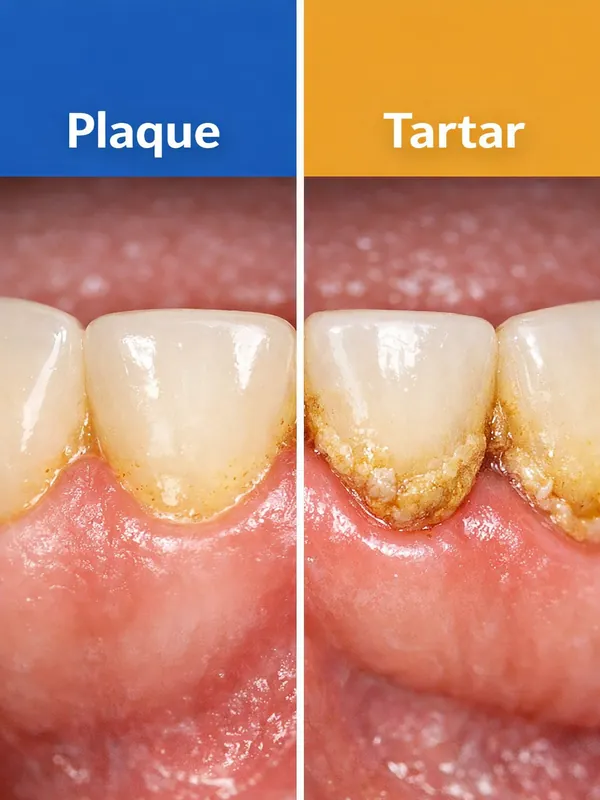
  • Texture
    • Plaque: soft, sticky → removable with home care
    • Tartar: hard, cement-like → professional removal only
  • Speed
    • Plaque forms every day
    • Tartar can form in 24–72 hours if plaque sits
  • Risk
    • Plaque: early enamel wear, gum irritation
    • Tartar: ongoing inflammation, gum disease, bone loss

How We Treat It at Milpitas Dental Group

  • Professional cleaning (prophy): Removes plaque, stains, and tartar above the gumline; polishes to a smooth finish that resists buildup.
  • Periodontal therapy (deep cleaning): When tartar and inflammation extend below the gumline, we perform scaling and root planing to clear deposits and calm the gums.
  • Personalized prevention plan: Fluoride, sealants (for kids and cavity-prone adults), sensitivity care, and home-care coaching.

FAQs: Plaque, Tartar, and Cleanings

Can I remove tartar myself?
No. Tartar is mineralized and too hard for brushing or flossing to dislodge. DIY scraping can damage enamel and gums. A hygienist removes it safely with professional tools.

Does tartar cause bad breath?
Often, yes. Tartar traps plaque and food particles, which can lead to persistent halitosis. Cleanings + good home care usually improve breath quickly.

Why do I build tartar so fast?
Everyone’s saliva chemistry is different. Tight tooth spacing, orthodontic wires, dry mouth, and diets high in sugary/sticky snacks all increase buildup. We can tailor a plan (e.g., 3–4 month cleanings, targeted tools) if you’re a “fast builder.”

What’s the best toothpaste or mouthwash to prevent tartar?
Use a fluoride toothpaste twice daily and any alcohol-free rinse you’ll use. If your gums are inflamed or you’re high-risk, we may recommend a prescription-strength rinse or toothpaste.

Electric brush or manual?
An electric brush with a 2-minute timer and pressure sensor helps most people remove more plaque with less effort—but good technique wins either way.

How often should I get a cleaning?
Most healthy patients: every 6 months. If you build tartar quickly or have a history of gum disease, every 3–4 months is smarter.

Do kids get tartar, too?
Yes—especially around molars and retainers. Regular cleanings, sealants, and brushing help keep it away.

Your Local Smile Team in the South Bay

If you live in Milpitas, San Jose, Fremont, Union City, Mountain View, Sunnyvale, or Alviso, we’d love to help you keep plaque away and stop tartar from forming. A quick visit can mean fewer cavities, healthier gums, and fresher breath—all year long.

Call (408) 719-9340 or book at milpitasdentalgroup.com.

4Nov 2025

How Do Dentists Fix Cavities? Step-by-Step Fillings in Milpitas

If you’ve been told you have a cavity, you might be wondering what actually happens during a filling. Here’s a clear, no-fluff walkthrough of the process we use at Milpitas Dental Group—what you’ll feel, how long it takes, and how to care for your tooth afterward. Patients visit us from Milpitas, San Jose, Fremont, Union City, Mountain View, Sunnyvale, and Alviso for fast, comfortable treatment close to BART and the Great Mall. Tooth decay starts when mouth bacteria make acids that weaken enamel and, if untreated, form a cavity. CDC

First: confirm the cavity

  • Digital X-rays & exam: We verify the size and location of decay (between teeth, on chewing surfaces, or near the gumline).
  • Treatment plan: We’ll discuss options—usually a tooth-colored (composite) filling; for larger decay we may suggest an inlay, onlay, or crown. (Standard treatments vary by severity.) NIDCR

Getting comfortable (numbing)

  • Topical gel: Numbs the surface so the anesthetic injection is barely noticeable.
  • Local anesthetic: Your cheek or lip may feel puffy or tingly for a couple of hours. You shouldn’t feel pain during the procedure—only gentle pressure and vibration.

Removing decay

  • Isolation: Cotton rolls or a small shield keep the area dry.
  • Gentle shaping: We remove the softened, infected enamel/dentin and shape the space so the new material bonds well. You’ll hear the handpiece, but you shouldn’t feel sharpness—just vibration.

Building your new tooth (composite filling)

  • Etch & bond: A micro-etch prepares the enamel; a bonding agent is applied so the filling fuses to your tooth.
  • Layering composite: We place tooth-colored material in layers and light-cure each one for strength; proper energy and wavelength are key for long-term performance. ADA
  • Sculpting the bite: We recreate natural grooves so the tooth looks and functions like new.

Bite check & polish

  • Articulating paper: You’ll tap and grind lightly so we can fine-tune any high spots.
  • Shine & smooth: Final polish helps resist staining and makes the restoration feel like natural enamel.

Total chair time: 30–60 minutes for most single fillings (a bit more for multiple teeth).

What will I feel afterward?

  • Numbness: Expect 1–3 hours. Avoid hot drinks and chewing your cheek/lip.
  • Mild sensitivity: Cold or pressure sensitivity can last a few days while the nerve settles—this is normal.
  • When to call us: If biting feels “off” or you get sharp zings that don’t improve within 48–72 hours, we’ll adjust your bite quickly. General after-care guidance is consistent with MedlinePlus. MedlinePlus

How long do fillings last?

Composite fillings commonly last many years with good care.

What if the cavity is large?

If decay is extensive, we may recommend:

  • Inlay/Onlay: A lab-made porcelain or composite piece for extra strength.
  • Crown: A full-coverage “cap” if the tooth is cracked or heavily restored.
  • Root canal + crown: If decay reaches the nerve and causes infection or persistent pain. (All are standard paths when a filling isn’t enough.) NIDCR

Cost, insurance & timing

  • Insurance: Most PPO plans cover a portion of fillings after your deductible.
  • HSAs/FSAs: Eligible expenses you can “cash in” before year-end.

Prevention tips (so you need fewer fillings)

  • Brush 2×/day with a fluoride toothpaste
  • Floss daily (especially those tight molar contacts)
  • Rinse after sugary snacks or coffee
  • Professional cleaning & checkup every 6 months (Milpitas, San Jose, Fremont, Union City, Mountain View, Sunnyvale, Alviso—easy access). Cavities are common but largely preventable with daily care and regular dental visits.

FAQs

Does a filling hurt?
With proper numbing, you should feel only pressure and vibration.

Can I eat after?
Once numbness wears off. If you must eat sooner, choose soft foods and chew on the opposite side.

Is tooth-colored material strong enough for molars?
Yes—modern composites are designed for chewing forces and can be used in back teeth.

Will my tooth be sensitive forever?
Sensitivity usually fades within days to a couple of weeks. If it persists, we’ll evaluate your bite or rule out deeper issues.


Ready to fix a cavity—fast?

Request an appointment or a benefits check. If you’re near the Great Mall or commuting via BART, we can often see you before/after work or during lunch.


Popular nearby searches: dentist Milpitas, cavity filling San Jose, emergency dentist Fremont, tooth pain Union City, dental clinic Mountain View, Sunnyvale dentist, Alviso dental.

Skip to content